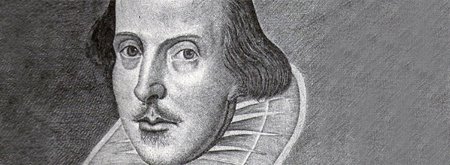
Shakespeare – A Christian Worldview?
William Shakespeare is regarded as the greatest writer in the English language and the world's pre-eminent dramatist - yet we know little about his personal life. Jerram Barrs considers whether his plays demonstrate a Christian worldview.
William Shakespeare
- Born 1564; died 1616
- A private man about whose personal life we know very little – this had given rise to endless speculation
- An actor, a part-owner of a theatre company, a poet – one of the greatest, and a playwright – probably the greatest in any language
- Because he is such a great writer – every speech from whatever perspective is powerful and persuasive
- The writer with a thousand faces
He took material from a great diversity of sources:
- From the world ancient Greece and Rome
- From many parts of Europe
- From the history and legend of Britain
People have looked to find many different perspectives in his plays. Hamlet is a classic example of this – different productions make Hamlet: hero, madman, villain, romantic, misogynist, a man in love with his mother, etc.
Yet, I am persuaded that a Biblical worldview pervades all that he writes.
Some examples:
- Henry V – the mirror of Christian kings
- Measure for Measure – study of Law
- Legalism and Pharisaism – pride and self-righteousness
- Justice and Mercy
- Redemption
- Macbeth – an extraordinary reflection on the nature of evil
1. The interaction of the supernatural world of demons and witchcraft with this world
When we read the script or watch a production there are various ways the play is understood today – which is Shakespeare’s?
a) The supernatural is not real at all – it is all within Macbeth’s own diseased mind.
b) The supernatural evil is determinative of events in this world – see Polanski’s film for the pervading and controlling power of darkness.
c) There is an interaction between evil supernatural powers and this world – lies and deceit attempt to take a human soul captive – but the human is significant and can choose resistance: see Banquo who resists temptation.
- Macbeth chooses to believe the witches for his own advantage
- This is clearly Shakespeare’s view – the reality of the evil supernatural and the significance of human persons
2. Human significance creates true tragedy
- Many modern productions lose the tragedy by presenting Macbeth as a puppet on the wheel of fate, or as someone with a personality flaw that makes him powerless to resist evil
- Shakespeare’s play is a study of descent into evil as real choices are made by both Macbeth and Lady Macbeth
- The play opens with Macbeth as a hero – so we may identify with him and see his good qualities
- Even to the end of the play he is given some of the most beautiful poetry in all of Shakespeare to speak, presenting his ongoing human glory and underlining the tragedy of his fall
3. The consequences of their choices present to us a fully Biblical understanding of evil
a) Loss of fellowship with God
b) Alienation from oneself
c) Loss of dominion over one’s life
d) Breakdown of relationships with others
e) Because Macbeth is in authority the whole of his realm of Scotland is racked with evil
f) Disorder even in the world of nature